PARTNERS
- VAMED KMB
- AKH Wien
ABSTRACT
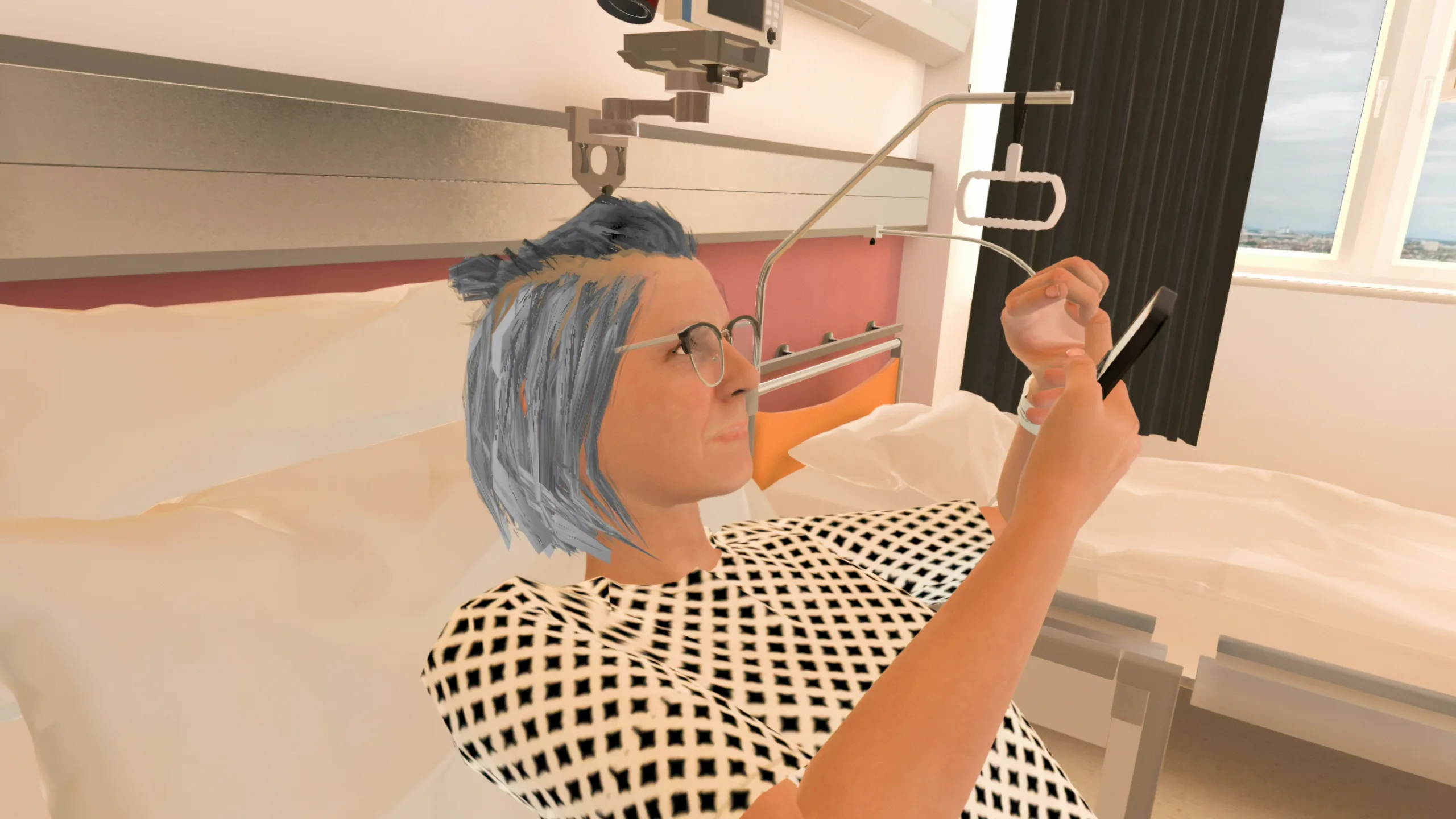
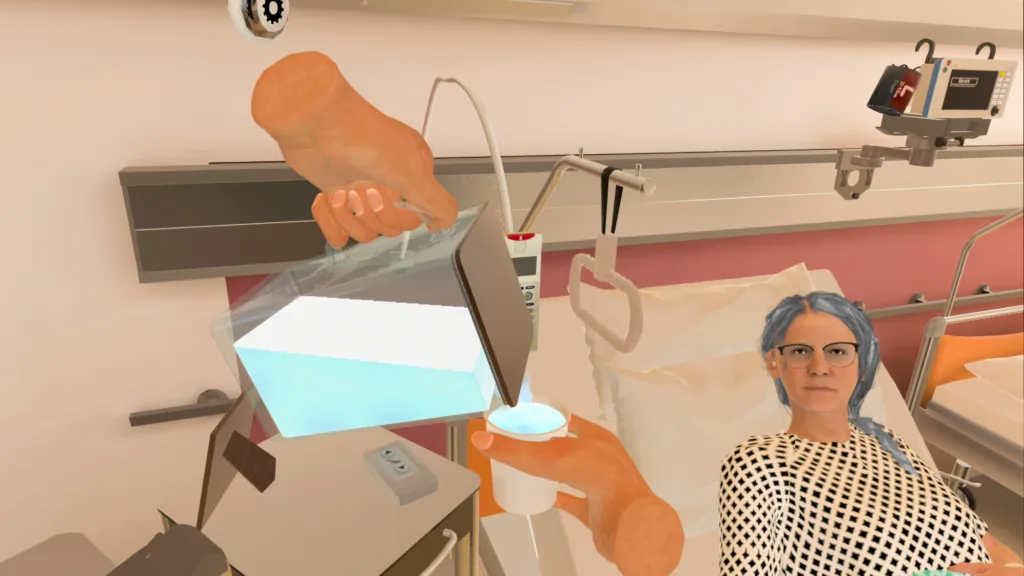
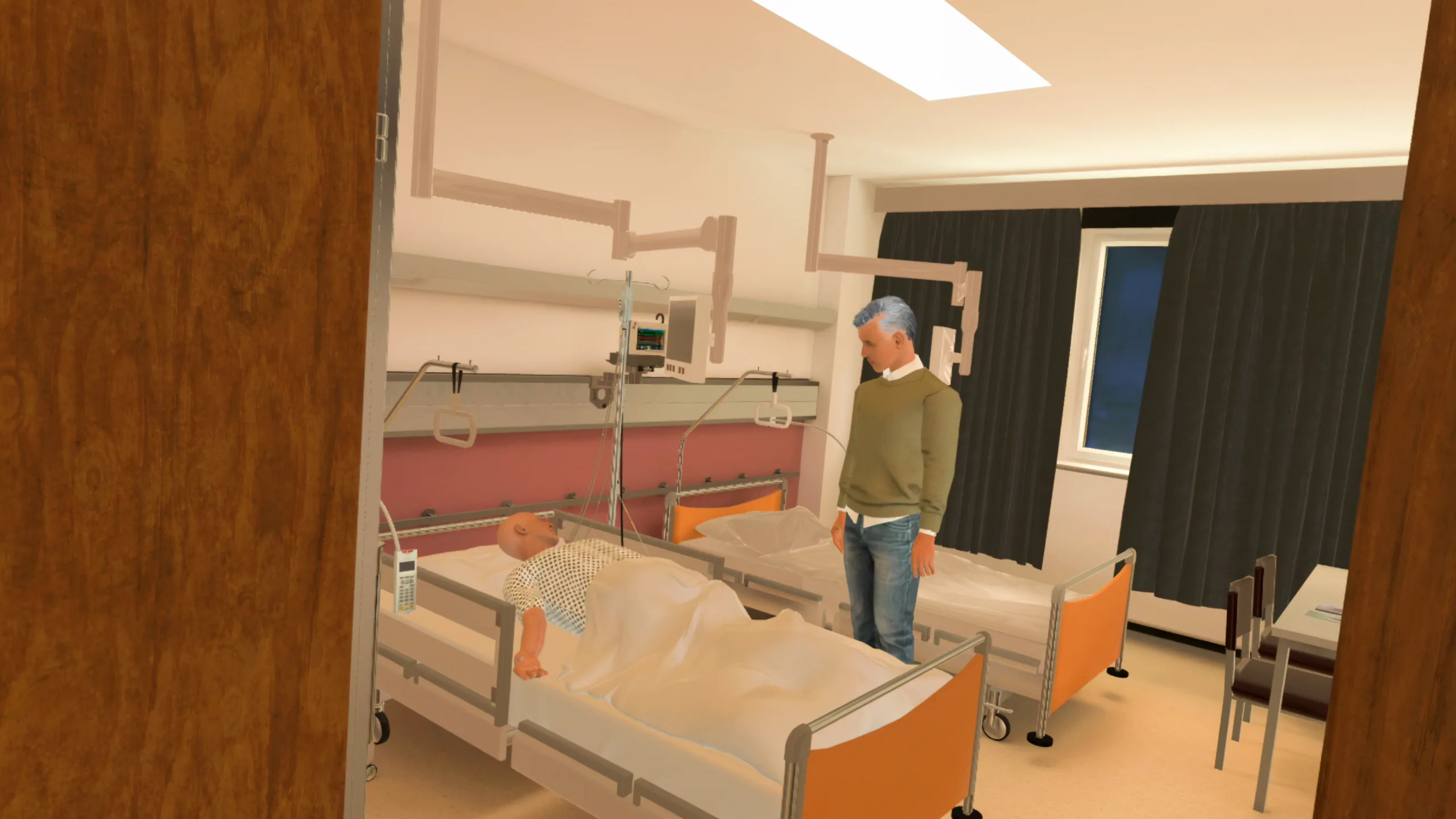
DelirXR is an interactive XR training application designed to support nursing staff and clinical teams in recognizing delirium early and applying effective preventive measures. Within an immersive VR environment, learners experience realistic patient situations in which delirium presents in different forms. The application simulates both hyperactive and hypoactive delirium, using a randomized scenario selection to enable repeatable yet varied training experiences. DelirXR includes an integrated tutorial, structured learning steps, and feedback mechanisms, making it highly suitable as a standalone solution on mobile headsets for use in everyday hospital practice. Developed in close collaboration with clinical experts, DelirXR ensures high clinical accuracy while remaining accessible and easy to implement.
CHALLENGE
The main challenge was to translate delirium-related content into a training experience that is both clinically accurate and highly realistic, while keeping the overall interaction design low in complexity—yet still delivering a strong learning outcome. Delirium is often subtle, fluctuating, and difficult to detect, particularly in its hypoactive form, which is frequently overlooked in routine care. The goal was therefore to create an experience-based application that helps learners understand how delirium can manifest in real patients, while ensuring fast onboarding and immediate usability. In addition, the solution had to be designed as a mobile, infrastructure-light standalone application, suitable for integration into hospital workflows without requiring extensive technical setup.
SOLUTION
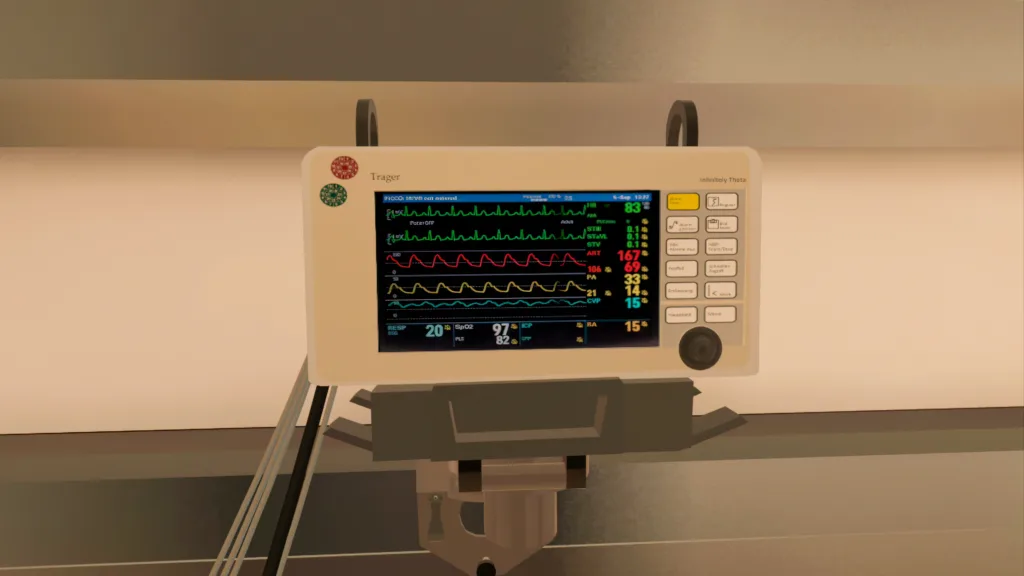
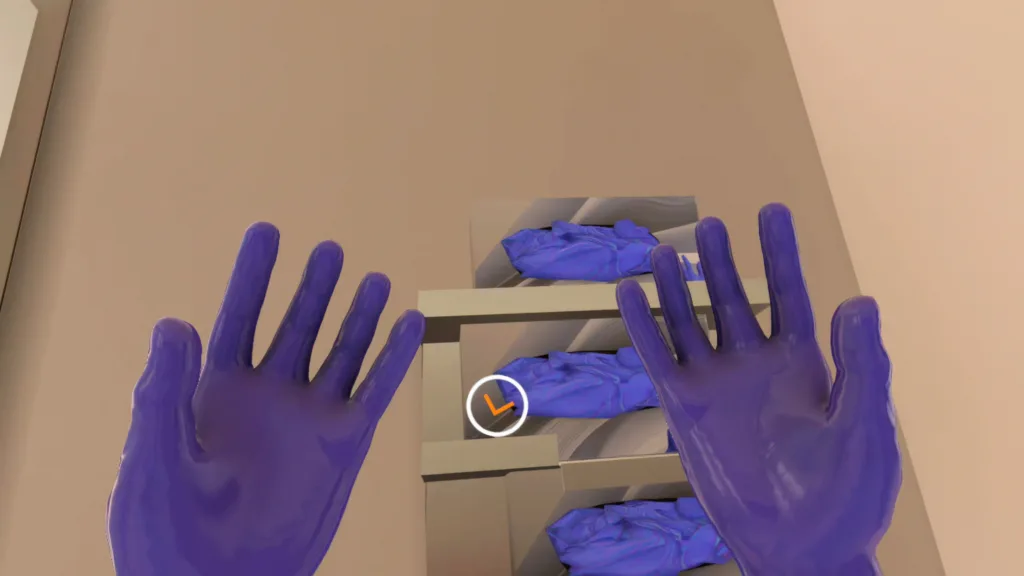
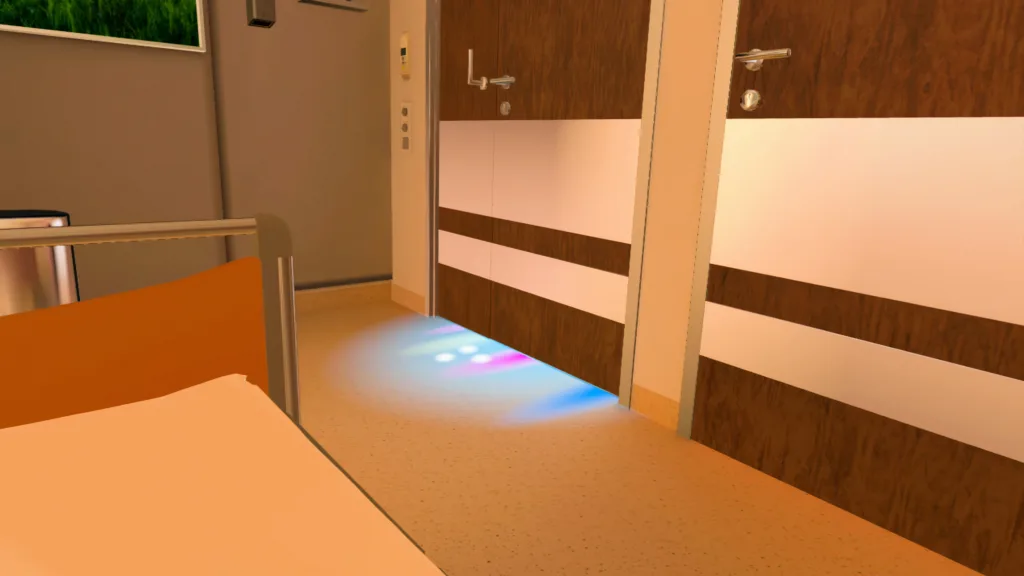
DelirXR provides an immersive training concept that makes delirium symptoms and typical clinical situations experiential and memorable, strengthening clinical confidence and decision-making. In an interactive VR environment, users practice identifying key indicators of delirium, distinguishing between hypoactive and hyperactive presentations, and applying appropriate preventive interventions in everyday care contexts. Through randomized scenario selection, the training remains engaging and supports repetition-based learning and reflection. A built-in tutorial ensures an intuitive entry into the application, while structured feedback highlights performance, reinforces correct actions, and supports continuous improvement. As a standalone solution running on mobile headsets, DelirXR can be used flexibly for onboarding, refresher training, or on-site education in the hospital – efficient, practical, and scalable.